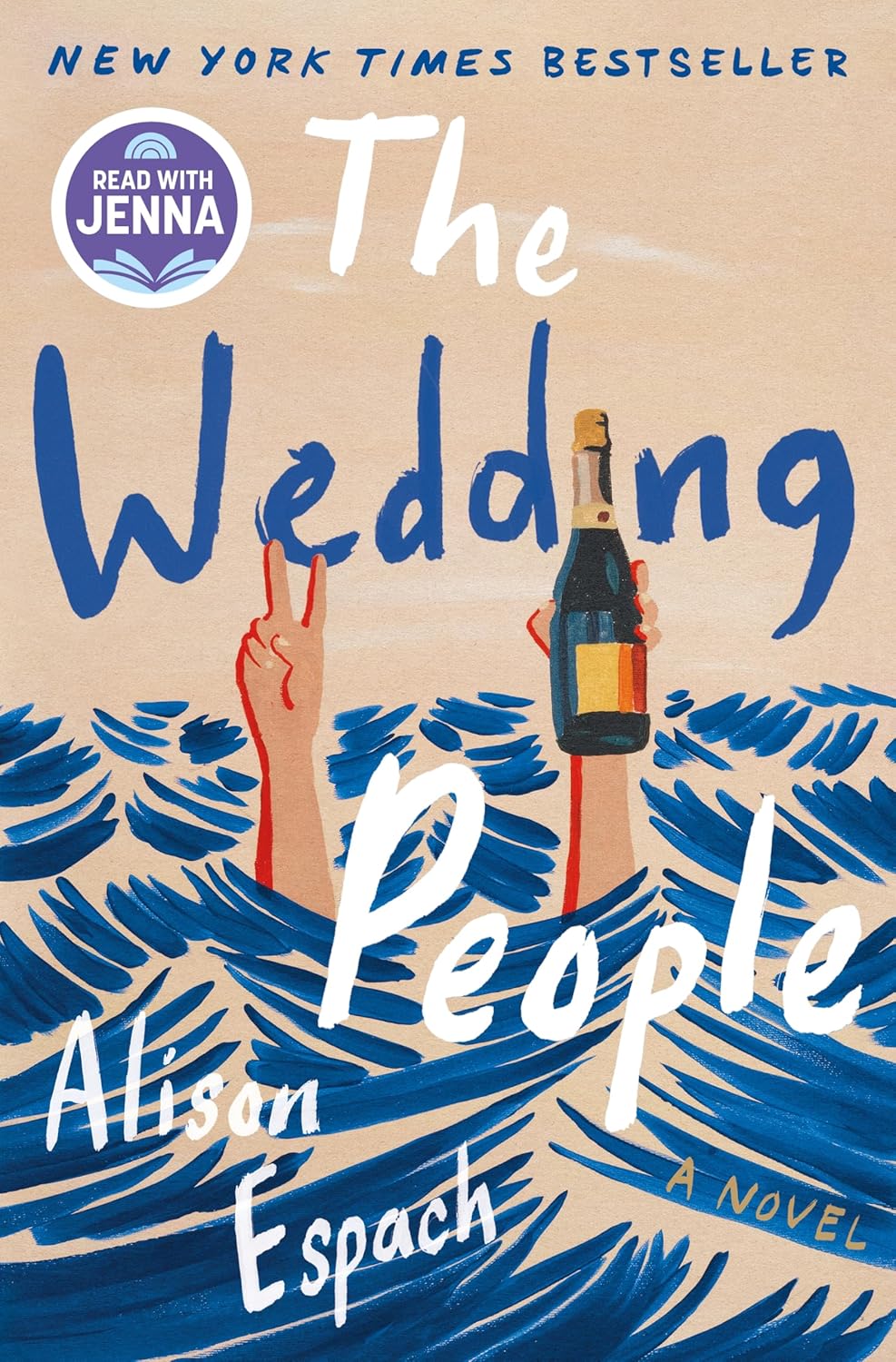
I had been in what felt like a reading slump until Virginia Evans’s The Correspondent perked me up. Then a friend lent me Alison Espach’s The Wedding People, and it too was a book that drew me back to it each chance I got, instead of malingering on my side table while I watched yet more TV.
I don’t know exactly what it was exactly about The Wedding People that worked so well for me. My friend cautioned me that the plot turns on someone who begins the novel planning her own death: her situation and also the whole tone of the novel set that so far apart from my own experiences that while it was certainly dark, it wasn’t off-putting or personally upsetting. In fact one thing I appreciated throughout The Wedding People was that Espach manages to sustain the novel’s comedy without losing trivializing her protagonist’s feelings, her sense of having had enough, of being ready. The way she is drawn back into life through accidentally crashing an elaborate ‘destination wedding’ was equal parts farcical and poignant. Somehow, she just can’t seem to extricate herself, and as she gets more and more involved with the wedding people she finds herself less and less tired of living.
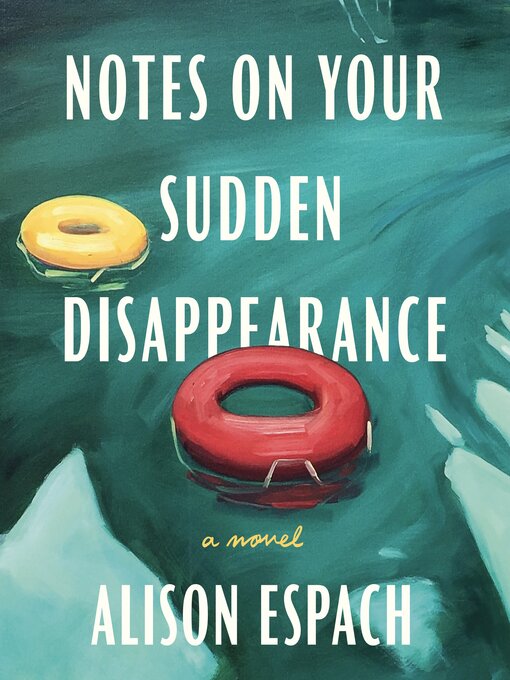
I read The Wedding People pretty briskly and was enjoying the momentum so much that I didn’t pause to put in any post-its flagging key scenes or quotable moments–plus its appeal (for me, anyway) lay more in the accumulation of incidents and the gradual elaboration of its characters and their entanglements. So I won’t lay out more details here! But more evidence of how much I enjoyed it is that when I was done, I promptly went looking for Espach’s other novels, and her earlier Notes on Your Sudden Disappearance turned out to be on the shelf at the Central Library.
This one turned out to be harder and sadder–imagine, harder and sadder than one that opens with a suicide attempt! It centers on Sally, whose older sister Kathy is killed in an accident while her boyfriend Billy is driving with the two sisters in the car. Sally’s family is of course devastated; her mother especially is utterly grief stricken and broken. Meanwhile Billy has to live with his guilt and Sally with her trauma; the two of them have a bond born of their terrible experience, and the novel follows the ways their lives overlap over the years following Kathy’s death.
Sally, who narrates, has a sharp eye and a wry voice: though unlike The Wedding People this novel is never comic, it is certainly funny at times. I think I am getting too old to feel terribly invested in ‘coming of age’ novels unless they are Jane Eyre (or, I guess, Great Expectations, which I am currently rereading for class and loving as always). I liked Notes on Your Sudden Disappearance and was often moved by it, but I actually found Espach’s acknowledgments, which suggest that she lost a brother, the most touching part: “Thank you to my parents,” she says, “for always encouraging me to write about the hard things and for never shying away from the reality of our grief.”
 Novel Readings