And now, in this low and critical moment, something in Penelope, something which had understood courage and resource and action, though she herself had never been brave or resourceful or active, stirred and shook itself. The pirate woman, Jane Moore, the Aztec girl, Xhalama, the misunderstood Tudor stateswoman and others of their blood, stood by her bed, urging her to save herself . . . and to justify them.
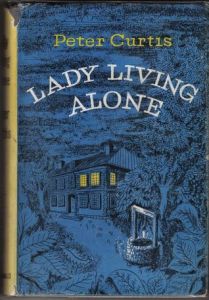
In his excellent ‘Afterword’ to the British Library Women Writers edition of Lady Living Alone, Simon Thomas (known to many of us from his excellent blog Stuck in a Book) highlights the genre trickery that makes this little novel so slyly surprising. Initially it conforms to the tropes, tone, and expectations of “comic, domestic fiction.” It centers on Penelope Shadow, an awkward, unobtrusive, and largely ineffectual woman with an overpowering fear of being alone in the house. One day Penelope buys a typewriter, shuts herself in her room, and rattles away at it day and night until she produces what becomes the first in series of historical novels. “Miss Shadow,” we’re told, “had at last found the job for which she was suited, a job which did not demand regular hours, spurious politeness nor the soul-jarring contact with people; so, through good years and bad, she persevered with it” until one of her books, Mexican Flower, is a big success and makes her enough money to move out of her half-sister’s house into one of her very own.
Hooray! you might well think: she has written her way to independence. But this is where her difficulty with being alone becomes not just a quirky character trait but an obstacle to her contentment. Driving home one night in a snowstorm, Penelope realizes that because the latest in her series of housekeepers is gone, she would have to be alone, so instead she pulls up at the Plantation Guest House. There, during the course of a generally uncomfortable stay, she meets “the boy,” a handsome young man named Terry Munce, who looks after her so readily and ably that she ends up offering him the job as housekeeper.
 Terry is a great addition to Penelope’s household and her life: he takes excellent care of her, even giving her massages when she is stiff and tired from typing. Once again things seem to be going well for Penelope, but Terry’s presence kindles gossip. When he confronts her about it, he shocks her by adding “I happen to be terribly in love with you.” He kisses her, “and Penelope was lost.” She agrees that they should marry. Hooray! you might think: our mousy heroine has found love. But before the chapter closes, the novel shifts gears, giving us a glimpse of the real Terry in his “expression of calculating triumph”: “After all, one likes six months of hard labour to bear some result.”
Lady Living Alone does not shift immediately from domestic comedy to domestic suspense: the next phase of the novel traces the rifts that emerge in Terry and Penelope’s relationship. He behaves badly, but he is not overtly sinister, and for some time Penelope’s position seems more pathetic than perilous. But then things take a turn, and Penelope has to wonder if it is possible that this young man she has befriended, trusted, and loved might in fact be trying to do away with her . . .
I don’t want to spoil the fun of your finding out for yourself how things turn out. Something I found particularly interesting about the novel’s conclusion that doesn’t bear directly on plot revelations is its connection to Penelope’s writing. It is generally seen as eccentricity by those around her—”If she think you can keep a husband by hitting a typewriter all day and all night,” she overhears one of her servants muttering at one point, “let her find out different for herself”—and no particular merits are ever ascribed to her novels. Her subjects are strong women, though, including Queen Elizabeth. “I know why she never married,” she scribbles in her notebook when she turns back to writing after her marriage:
Oh, she was as certain as though she had been there, that Elizabeth Tudor had never taken Leicester or Essex to her bed. Because if she had done she too, being human, would then have owned a master.
How does that happen, she wonders; “the balance swung so gently that it was not until one scale bumped heavily that you realised that there had been a disturbance.” She too is mastered in her marriage, not so much (at first) through overbearing conduct on Terry’s part but through her own love of him and her desire to be loved herself, to believe in what she thinks they have. When she finally realizes that he is a threat, that she is going to have to defend herself or die, her situation seems hopeless:
A poor little ageing creature, sick, doubting her own sanity, and broken in spirit. A pitiable little object to any observer, had there been one who could see and understand.
But there is more to Penelope Shadow than that: she has “made and known and understood some remarkable, courageous, fiery, indomitable women,” and from them she takes courage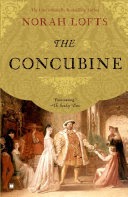 —and gets ideas. “If we are part of all we have been,” comments the narrator, “how much more are we part of all we have made?” I loved this moment, which picks up on an idea that has been central to a lot of my own work on women’s writing. “Lives do not serve as models,” Carolyn Heilbrun wrote in Writing A Woman’s Life; “only stories do that.” For Penelope, the stories she has written quite literally empower her—and then it is “over and done with, and Penelope was no more a clever, cunning, ruthless creature, but a gentle little woman with a conscience.”
I read some of Norah Lofts’s own historical novels long ago: the one I particularly remember is The Concubine, about Anne Boleyn, though I am sure there were more in our nearby public library, where I used to sign out stacks of Tudor (and Ricardian) fiction every week. It is hard not to read some justification of her own work and heroines in the strength Penelope Shadow gets from hers. Lofts published Lady Living Alone under a pseudonym, Peter Curtis; perhaps she thought the message, that women’s ‘romantic fiction’ was more subversive than it seemed, would be more memorable coming from a ‘man.’
 Novel Readings
Thank you for your kind words for my afterword! I’m so glad we did this one, and I loved reading your thoughts on it – I hadn’t spotted how her writing plays into her actions towards the end, but you’re so right.
LikeLiked by 1 person
Your commentary was really illuminating for me (though I was glad it was an ‘afterword’ and not an introduction!). I wish this series was more readily available here in Canada. Next time I’m in the UK I will have to stock up (I ordered this one in from Blackwell’s, thanks to their free international shipping).
LikeLike
Yes, that was one of my requests when it all started – that I really wanted to do afterwords rather than introductions, because I hate it when introductions talk about the plot!
LikeLike