I want to get back in the habit of low-fuss but (potentially, for me) high yield posting about my teaching this term. So without further ado, here’s what’s up this week.
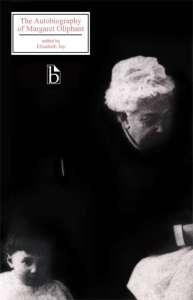 In my Victorian Women Writers seminar, we are discussing Margaret Oliphant’s Autobiography. When I was drawing up the syllabus for this version of the course, I included this book without much reflection, as it has always been a staple of the reading list. Preparing for class over the past few days has been a bit rough, though, as the last time I had actually read it was soon after Owen’s death, and Oliphant’s outpourings of grief about the loss of her “dear bright child” Maggie and then her sons Tiddy and Cecco remain unhappily resonant. Students have already commented in class that these are the most compelling sections of the autobiography, sometimes picking out exactly the passages that I quoted in my post about it. I am pretty good at compartmentalizing, and of course it would not be appropriate for me to say in class “yes, that’s exactly how I felt and thought after losing my own beloved child,” so I have managed to keep my own personal feelings in check in that context, but it is definitely a harder job doing that than it was when my relationship to her grief was purely theoretical or vicarious.
It’s such an odd and interesting memoir in so many ways. I’ve always been particularly struck by the conspicuous tension in it between two kinds of stories, one a fairly conventional account of Oliphant’s life and her experiences as a highly prolific writer, the other an intensely personal outpouring of her most private feelings. Her comments about her writing life themselves often signal a further tension between her identity as an “ordinary” woman (a point she makes repeatedly, and perhaps strategically) and her identity as a woman writer and thus a kind of anomaly. They are also interesting for her frequent comparisons of herself with other, more famous or highly praised, writers, especially George Eliot: she often tries to shrug off her sense of inferiority, or to excuse or justify her “lesser” standing on the grounds that she only ever wrote because she liked to and because she needed the money, disavowing ambition or serious literary aspirations—”I am afraid I can’t take the books au grand sérieux,” she says at one point, calling them “my perfectly artless art”—but it’s also clear that she feels both defensive and envious of the writers with higher reputations, making her self-deprecation seem disingenuous. 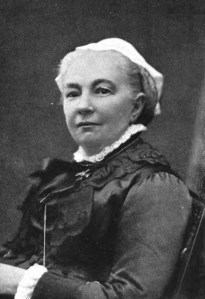
Critics have often analyzed the fragments and contradictions of the Autobiography as meaningful aspects of its literary form, reflecting the paradoxes and contradictions of Oliphant’s life and, more broadly, of the situation of every Victorian woman writer. That seems reasonable in a way, but Oliphant left her text unfinished, so the fragments are not themselves deliberate formal choices—we are actually reading the raw material of what for all we know might have been a very different, more integrated or unified memoir. This is not to say that this unity would not have come at a cost, particularly of authenticity. I found myself thinking as I was rereading our current installment this morning about the genre of the “grief memoir,” which seems from what I know of it to lean pretty hard into “a journey of discovery / recovery” as its narrative arc, ending with some version of acceptance. Of course that may be true to the authors’ experiences, but it’s hard not to suspect it is also more marketable than the devastating non-ending Oliphant’s memoir offers: “And now here I am all alone. I cannot write any more.” Denise Riley’s Time Lived, Without Its Flow, also stops rather than concluding: “And by now I’ve stopped making these notes.”
 In Mystery & Detective Fiction, we have begun our work on The Moonstone. I usually really enjoy teaching this novel as I know it well enough now and am confident enough in my own ideas about it that, while I do always reread it and update my notes, I can lead a fairly fluid discussion without worrying that we won’t get where I want us to go. Tomorrow is mostly “talk about Betteredge” day: I’ll start by just gathering up observations about what kind of fellow he is, considering both the things he explicitly says and how he says them—which is at least as important, given the novel’s emphasis on first-person testimony and the way eye-witnesses see according to their assumptions and prejudices. We can build out from there into a sense of the novel’s setting: what kind of world does Betteredge serve, what are the threats to or problems with that world, who in the novel begins to counter his point of view, and so on, which should lead us into Sergeant Cuff and what he brings to the investigation—and then the sources of his failures to solve the crime.
As my teaching posts over the year repeatedly remark, the first part of term is always a bit chaotic as we adjust and class lists are in flux and so on. By the end of this, our second week of classes, we should all have settled into more of a routine, although this is also the point at which the workload picks up as assignments and deadlines begin to arrive. The biggest change I’m noticing this term so far is the physical toll class meetings take on me, something that was already becoming apparent to me last term. I’m just more tired than I used to be when the session is done. It takes a lot of energy to keep the attention of a room full of people and, especially, to give them my full attention so that our back-and-forth is always clear and meaningful. You never know what someone who puts their hand up is going to say, and you are constantly figuring out how best to reply to it, which is precisely what I enjoy about teaching, because it means it is never truly repetitive, but it is also what makes it hard work. (Yes, mental effort is real work too!) And in lecture classes I pace around a fair amount once we get into discussion. When I get back to my office after class I’m not good for much else for a while—this in spite of my increased diligence about going to the gym. It’s a different kind of exertion, I guess.
The broader context of my teaching term is not very encouraging: budget cuts, a hiring freeze, ongoing pressure to do more with less, and over it all the worry that if we can’t somehow get in its way, generative AI is going to be allowed, even encouraged, to overwhelm us (meaning both professors and students). I find I don’t think or care much about any of this when I’m actually in the classroom. Plenty of students still seem pretty engaged, eager to read and ready to talk. As long as they keep on showing up in that spirit, I’m going to keep doing my best for them.
 Novel Readings
You have selected the Autobiography of one of my favourite critics (in her Blackwood days), and so I shall have to read her Autobiography, despite its obvious painful moments.
The Moonstone is one of my favourite novels, and is truly seminal in the English detective fiction genre. Superb choice, always.
And then there is always The Woman in White, which I particularly identify with as the early chapters are set in our neighbourhood around where our children were at prep school.
Thank you for your thoughtful postings.
Patricia in near-north London
LikeLike
That’s a very cool connection to The Woman in White! When I assign that novel, it’s for my more general 19thC fiction class. It is definitely as much fun to teach as The Moonstone. 🙂
LikeLike
I was given a Classics Illustrated comic book version of The Moonstone for Christmas in 1965 or 166. I’ve loved it ever since. I hope you had a good day with Mr Betteredge. Wouldn’t it be lovely to just be able to open out favourite book at a random page and find the answer to whatever your current problem was? Assuming, of course, your favourite book can claim “that such a book never was written, and never will be written again.”
LikeLike
Sometimes I bring my copy of Robinson Crusoe to class and try it for myself! It has had some pretty funnily apt results on occasion.
LikeLike
Just a quick note, and later today I will read your posting in full.
I am reading Charlotte Bronte’s Villette, and it is a revelation. It’s as if it were written yesterday. With a first person narrator, as I’m sure you know, it’s almost like getting a long-lost letter from a woman struggling two hundred plus years ago with perennial issues of belief, love, identity, loneliness, and the list goes on. I have not read Jane Eyre since high school, but I will do so again soon. Jane Eyre is a great novel, I’m sure, but this one, perhaps more overlooked, is, I suspect, more complex and, in a different way, more compelling.
Jim Cassell A fan, even if I can’t keep up with every post Hamden CT
>
LikeLike
I definitely agree that Villette is an extraordinary novel, and in fact we will be starting on it in the Victorian Women Writers seminar in a couple of weeks, which I am really looking forward to. Many of the students in the class have already read Jane Eyre but I don’t think any of them have read Villette before. Whenever I’ve taught it before, it has gone over really well, for the reasons you touch on!
LikeLike
As a Trollope (Anthony) admirer, I really need to read more of Oliphant’s work. I suspect they would c0ompliment each other quite well!
LikeLike