Ruth sighs. It takes a great deal of energy, week after week, pressing her one remaining desire. “Try thinking of doneness as an awful illness then, and bound to be terminal. If you can’t even imagine feeling finished, you must think it’s a pretty terrible state to be in. So it’s about accepting what a person—me—regards as the end of the line. My definition of a fatal disease, which isn’t necessarily yours.”
A cautionary note about the rest of this post. Joan Barfoot’s Exit Lines is about someone planning to end their life. That is a tough topic for most people, I expect; it is certainly a tough one for me, and the novel brought up a lot of painful thoughts about Owen’s death in ways that I talk a bit about here. If you find discussions of suicide distressing, you should probably not read on. Canada now has a Suicide crisis helpline: call 9-8-8 if you need support. The same number also works in the United States and the United Kingdom.
Exit Lines is a brisk, smart, darkly comic novel about four people who move into a retirement community named—in typically euphemistic style for such places—the Idyll Inn. When the novel opens, our protagonists are creeping through the residence’s darkened corridors at 3 am. on a secret mission, the full details—and the outcome—of which we only gradually discover. In the meantime, Barfoot deftly recounts the story of their settling in and making what accommodations they can to their new circumstances—including the loss of autonomy and privacy, the depressingly bland dietary options, the relentless parade of activities that, though well-intentioned, inevitably come across as infantilizing, and the knowledge that the Idyll Inn will be the last place any of them call home.
The novel cuts back and forth between chapters taking us, bit by bit, further down those scary hallways (“Three busy hearts leap and bang. Legs are wobbly, hands a bit shaky, flesh feels fragile. These pajamas, nightgowns, slippers and robes are warm, but the skin beneath is unfairly goosebumpy, shivery”) and chapters that tell us more about Sylvia, Greta, George, and Ruth—including what their lives and families were like before they ended up at the Idyll Inn. They were not all strangers to each other before, but the bond they form at the Inn is a pleasantly bracing surprise. It is particularly important to Ruth, who has determined to control her eventual exit from the Idyll Inn by ending her own life, on her own timeline and in the way that she has figured out will be quickest, least painful, and easiest for those assisting her to cover up. In her new friends she finds (she hopes) allies and co-conspirators, though she waits until she is fairly sure of their loyalty before asking for what she admits is an “enormous” favour, “to be with me come the time. And . . . to help me.”
Ruth’s request understandably shocks the other three:
Friendship is supposed to be companionability, compatibility, trust, empathy, challenge, warmth, goodwill, consolation, and sustenance. Not this. What she’s asking has to be—or is not?—beyond all possible bounds.
What follows is a lot of arguing and and soul searching as each of the characters confronts questions from the pragmatic to the profound:
What do they believe? What are their values, and if any, their faiths? How do these apply to the small figure of Ruth sitting here?
What is compassion, how important is trust? . . .
What exactly is so exceptional about human beings? A single human being? Besides the fact that only human beings can even contemplate such a question.
The single most important question is “Who gets to decide?” Ruth says she does, but Ruth’s friends aren’t so sure, or at least (especially if they are going to help her) they need a better reason than because it’s what she wants (“What Ruth wants: ‘My time, my place, my way'”). “I’m sure I’d have an easier time,” Sylvia finally says, “if you had an awful illness that was going to be fatal.” Ruth’s reasons are not as straightforward as that, and perhaps they are not as good as that—but whose business is that but hers?
 The others’ counterarguments are also not that robust. “God crops up,” but none of them is religious, or at least doctrinally secure, enough to insist that her plan is wrong or sinful. They are all in varying stages of physical decline, and the one certainty they share is that they will eventually leave the Idyll Inn the same way other residents have, their bodies whisked away as quickly and quietly as possible so as not to discourage the rest. Still, it’s one thing to die and another to kill yourself, or so they try to convince Ruth (“Those people who struggle to be alive. When we are safe and comfortable here—they feel their lives are precious even when they are so very difficult, but you do not feel your life is?” challenges Greta). Ruth is resolute, however, and finally, one by one, they come around. As Sylvia puts it after her own change of heart, “Whatever anyone says—lawyers, doctors, governments, religions, all those nincompoop moral busybodies that float around like weed seeds—we should be in charge of our own selves.”
It sounds so simple, even inarguable, put like that, but the long journey our characters take to get there reminds us that it isn’t, as does the lived experience of anyone with direct experience of suicide. Details matter, of course. What Ruth is seeking is closest to what here in Canada we have termed “MAiD,” medical assistance in dying, although the help she asks for isn’t strictly speaking medical—but that is precisely because she does not have the kind of “awful illness” Sylvia initially thinks would be the only justification for death on her own terms. Sylvia is thinking of a physical illness, and that generally seems to be the easiest scenario for people to accept. The availability of MAiD to those with illnesses other people can’t so easily see for themselves, specifically mental illnesses, is more controversial. I’ve had several painfully searching conversations about this issue since Owen died: I am fortunate to have people in my life who are deeply thoughtful as well as remarkably kind, and I have been truly grateful to be able to talk with them about what having this option might have meant to Owen, as well as how I expect I would have felt about it as his mother. If I have reached any conclusions, they rest, as Sylvia’s does, on the primacy of autonomy as a right and a value. But there is nothing simple about any of it—the hypotheticals are as terrible for me to contemplate as the reality, if in different ways.
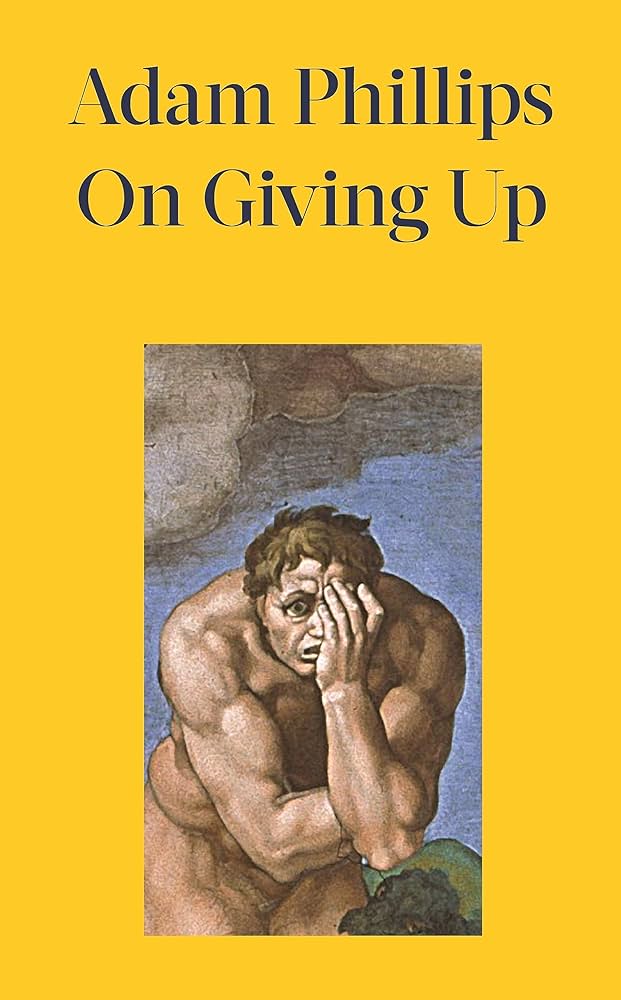 Barfoot simplifies things for her characters by emphasizing Ruth’s clarity of mind and purpose: whether you find her desire to die more or less acceptable as a result is going to depend on your values, but it does, I think, help answer the question “who decides” in her favour. Illnesses like depression affect, perhaps distort, people’s perception of reality: it is harder to defer to their autonomy, then, although perhaps it shouldn’t be, as what makes the most difference to someone’s quality of life is how they experience the world, how they experience life, not what other people insist it is actually like. Of course, we want to believe things will change for them, that they will get better, and most depressed people will. What does that mean about their right to say, as Ruth does, “my time, my place, my way,” or our right to intervene? One of the most insightful discussions I’ve heard about suicide since Owen’s death is an interview Hermione Lee did with Adam Phillips about his book On Giving Up. Phillips argues that we should be “able to acknowledge, not happily, that for some people, their lives are actually unbearable,” that the dogmatic insistence on life as the ultimate unassailable intrinsic good (what he calls “the ‘life is sacred’ line”) “means you are absolutely compelled to suffer whatever it is that’s inflicted on you,” which he rejects as an “intolerable position.” I agree, while recognizing as he does that this does not make any part of such a scenario anything other than heartbreaking, tragic. Phillips notes that the famous psychoanalyst Donald Winnicott never tried to dissuade anyone from suicide: “I just try to make sure they do it for the right reasons,” Winnicott said. I find that a defensible and principled position—but this is a case in which my head and my heart are in profound and perhaps intractable conflict.*
Is Ruth seeking death for the “right reasons”? I think Exit Lines ultimately answers this question in the negative, although I won’t go into spoilers about what exactly happens. I found the novel’s ending disappointing in some ways, because it seemed to falter from its own hard won and, to my mind, justifiable position. On the other hand, Barfoot’s characters do find comfort in the choice Ruth has fought for, in knowing that they do not have to “be helpless,” that “this could be a strong thing, although [they] did not dream of it before.” They feel better knowing that they do not have to drift passively into that good night but can stay in control, so that each day is really their own unless or until they choose otherwise. Planning for this eventuality gives them a long-term project “more riveting than playing bridge, watching TV or turning needles and wool, click, click click.” The tone of the ending, which is uplifting without being saccharine, is well suited to the book as a whole, which I have probably made sound much heavier going than it actually is. I began by describing it as “darkly comic” and it really is quite funny, and exceptionally clear-eyed about people’s weaknesses and hypocrisies and moral compromises. I really appreciated Barfoot’s ability to combine a brisk, entertaining story with such important questions about life and death. The book I read right after it, Elizabeth Berg’s Never Change, tries to do something similar—it is about someone with terminal cancer making decisions about the end of his life—but by comparison it seemed pat, simplistic, and emotionally manipulative.
It was Backlisted that made me go looking for something by Barfoot to read: their conversation about her earlier novel Gaining Ground (aka Abra) was completely convincing about the quality of the novel. Exit Lines is the only one of Barfoot’s novels held at the Halifax Public Libraries, which is why I got to it first, but it turns out the Dalhousie library has a lot of them, several of which I checked out on my last visit to the stacks. I don’t know why I hadn’t already read more of Barfoot’s fiction: I had certainly heard of her, and I think I actually read Dancing in the Dark many years ago, but somehow I had never gotten any further. I plan to make up for that in the next few weeks.
*I am not interested in debating the ethics of suicide here, or in defending either Owen’s choice or our understanding of it. I was recently reminded that this is a subject on which some people feel free to judge and criticize both the person who died and those who grieve them. Comments along those lines will be deleted.
 Novel Readings
I have a novel coming out next year, set in the year before Canada passed its medically assisted death legislation. The book considers at length the decisions two people make about illness and death. A woman cares for her elderly father who is dying of a form of leukemia. He wants to die in his out of the way summer house on the Fundy shore in the worst winter in decades, and has decided against palliative chemotherapy. His daughter feels these are his decisions to make. Her brother disagrees. The older man’s neighbour believes his mother was complicit in his father’s decision to end his life rather than face the end stages of pancreatic cancer and has hardly spoken to her since his death. I’m not making an argument for or against any particular option, just presenting cases for consideration.
Stories about concerns over aging and dying are all around one in rural Nova Scotia, with its elderly population and inadequate infrastructure. In the past week I’ve listened to a 77 year old who has no medical proxy, worrying about medically assisted death options and pointlessly extending her life if “something happens to her,” while continuing to put off making a living will or talking to her lawyer, and a woman in her thirties talking about the conditions under which she does not want resuscitation or cpr. I’ve also been part of a conversation about how an 87 year old who suffered a serious stroke a few years ago and insists on living on her own, can continue to do that.
Joan Barfoot’s attempt to bring the subject into conversation and bring some humour, however black, to the discussion, sounds like a breath of fresh air. Surely any attempt to acknowledge the agency of the ill, the elderly, the dying, or any of us, for that matter, is a welcome contribution. I admire her bravery and will certainly read her book.
LikeLike
Agency, yes. But your comment about inadequate infrastructure is also so important. Winnicott (as I understand it) wanted people to get all the support and therapy they needed to be clear about their reasons. These are not decisions that people should be driven to by other failures, especially systemic ones.
LikeLike
Winnicott is right, of course, about the importance of support in understanding reasons and options. Two of the frequently heard “reasons” for wanting the ability to die on one’s own terms – I’m only speaking from personal experience here and in no way intend my remarks as generally true – are more fears, than reasons. The fear of intractable pain, and the fear of being stuck with a vastly reduced quality of life. The fear of being “a burden” often plays into things. When Montana and Oregon opened the option of medically assisted death in the late 90s, they reported that the vast majority of patients given the means to die, didn’t use them. Apparently having the means to hand allayed their fears. So, a matter of having their sense of ability to act on their own behalf restored. None of this is relevant to people who are in intractable pain, of whatever sort, or debilitated by illness. It’s only relevant to those looking ahead with trepidation, in places and cultures that treat these questions as taboos, dismiss them with prejudice, or haven’t the time or the stomach to talk them through. It’s also not relevant to those who are willing to die in their body’s own good time, but want to do it in the place and manner of their own choosing. They’re more likely to be hampered by the fears of their friends and family than their own. In all cases, it boils down to a matter of support, or the lack of it. One wonders if bringing the subject into accessible discussion through fiction, will help. I hope so.
LikeLike