 June began slowly, as a reading month anyway, as I was in Vancouver for the first 10 days of it and, as is pretty typical on these trips, I was too busy to settle down with a book. I did read about half of John Vaillant’s The Golden Spruce on the plane, and most of Donna Leon’s Drawing Conclusions while I was there (I borrowed it from my parents’ well-stocked mystery shelves but did not manage to finish it before I left). I’m definitely not complaining! It was a cheerful visit, made more so because Maddie was with me and I loved sharing my favorite people and places with her. Because we were also sharing a suitcase, I was also very restrained and did not buy any books while I was there. The only one I acquired was a very cool gift from my mother: a second impression of the first edition of The Waves
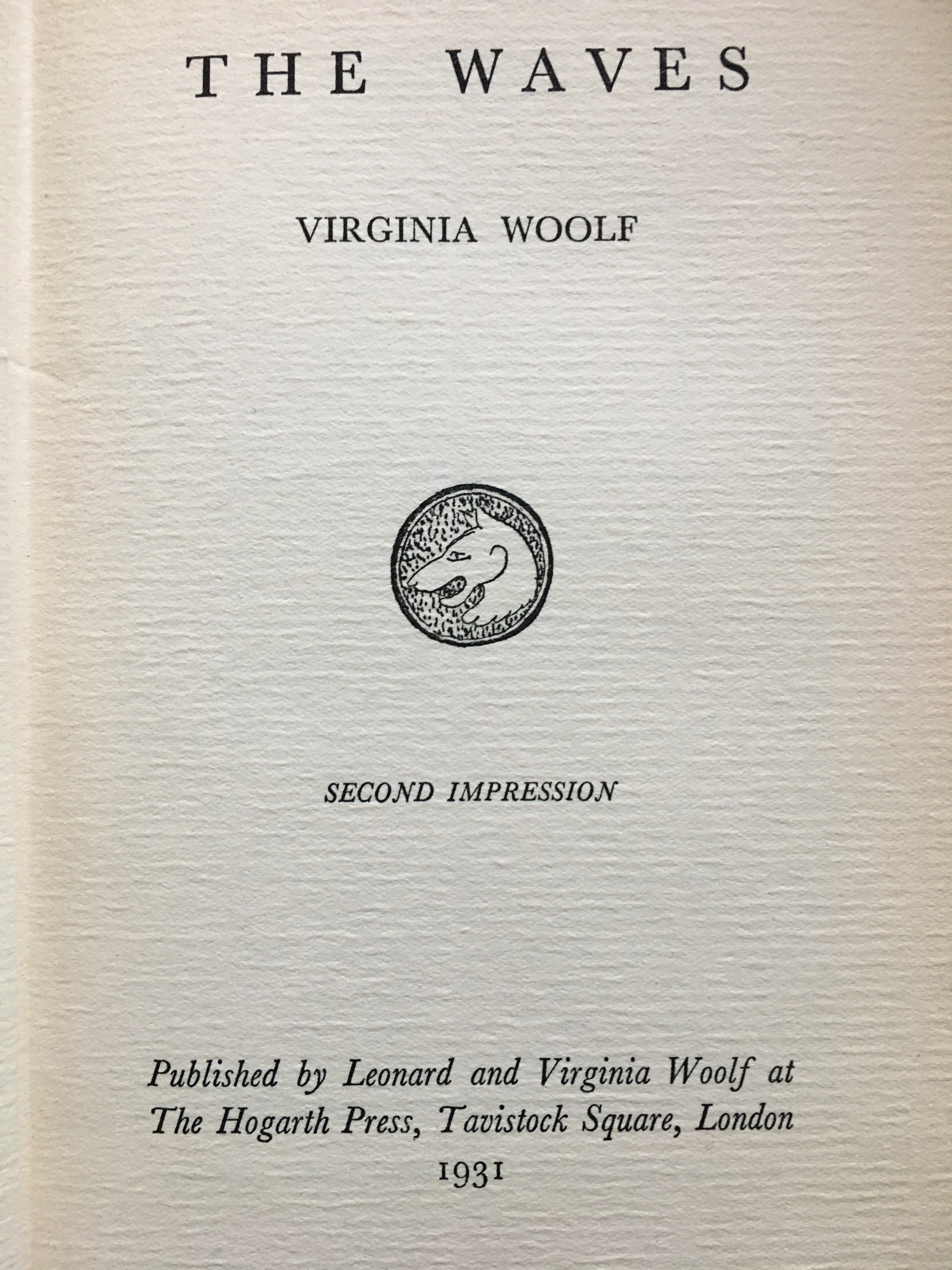 , from the Hogarth Press.
I tried to make up for lost time when I got back: by the end of the month I had read seven, nearly eight, books (I finished the eighth one, Michael Cunningham’s Day, this morning, so I guess technically it counts towards my July reading). I already had my say about Celeste Ng’s Our Missing Hearts and David Nicholls’s You Are Here; the other stand-out is Dean Jobb’s A Gentleman and a Thief, which is a well-told account of Arthur Barry, a daring and debonair “second-story man” who stole thousands of dollars worth of jewelry from the rich and privileged during the Jazz Age. His life story has many other surprising twists and turns, including a violent prison break and a tender and lasting romance. Jobb includes a lot of contextual information about the times and places and people in the book, all based on impressively thorough research. At times I did find myself thinking “this is how you turn one good idea into a whole book”—not that this material is padding, and certainly not that it doesn’t add anything, but the book got me pondering the whole genre of narrative non-fiction, not least because I had the same reaction to The Golden Spruce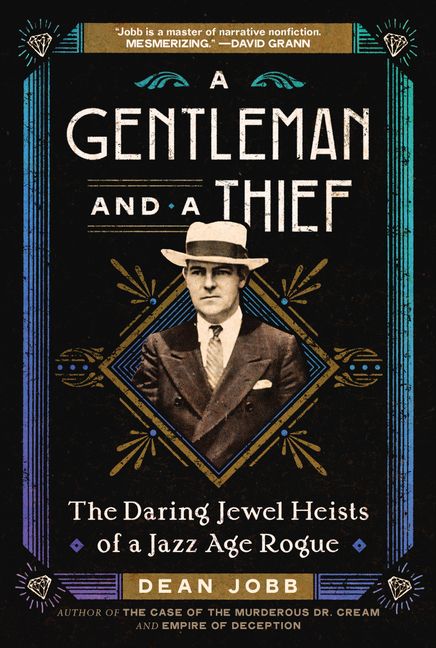 , that while all of its detail about the history and processes of the lumber industry in BC were interesting enough, the book also gave the impression of a single man’s story elaborated or built up with background and contexts until it made a large enough whole. Sometimes I just wanted to get on with the actual events!
I enjoyed Elizabeth Hay’s Snow Road Station, enough that I passed it along to a friend I thought might also like it, but not enough that I felt compelled to give it its own post. I found Emily Henry’s Funny Story fine: it passed the time, she writes OK, but I can’t imagine re-reading it (or any of her novels, for that matter). Funny Story had me thinking again about when a novel with a romance is a romance novel, a gambit nobody seemed interested in in my post on You Are Here. I’m pretty sure Funny Story is a (genre) romance, and by the time I’d finished it, I was more convinced than before that You Are Here is not, but it’s possible that You Are Here is just a better version of the same form. Better how? I want to say it’s richer, more thoughtful, more expansive, something like that, but I’m not sure I could defend those claims or demonstrate what I mean with examples. Anyway, I did enjoy Funny Story, about as much as I did Carley Fortune’s Meet Me At the Lake (which I read in May), but not enough to understand her massive best-sellerdom (or Fortune’s, for that matter). Any Emily Henry fans out there who would like to explain her specific appeal for them?
My other June reading was Tammy Armstrong’s new novel Pearly Everlasting, which I am reviewing for the Literary Review of Canada. As I told the editor, I almost certainly would not have picked up a book with its premise (it’s about a girl who is raised with a bear cub as her “brother”) to read just for myself. But it can be good, productive even, to read outside your comfort zone for a review, and I do always try to approach a book on its own terms, at least initially. We’ll see how this turns out! (What is it about CanLit and bears, though?)
And that’s my June reading! One thing I have figured out is that I get further these days if I settle in to read in the mornings than if I assume I will get around to it in the evenings. This isn’t really an option during the academic term, when I have to be up and out in time for classes and meetings, but my schedule is pretty flexible most days in the summer, plus I wake up quite early nowadays, meaning I can often get in an hour or two of reading before 8:30 or 9:00 a.m. and then start in on the day’s business. By 8:30 or 9:00 p.m., on the other hand, I am often past the point at which I can really concentrate pleasurably or productively on the page, so that’s a good time for P&P (podcasts and puzzles!), or crochet in front of the TV. It still seems to me that there are more hours in the day than there used to be, a phenomenon I’ve learned is shared by others who have found themselves living alone after years of busy parenting and cohabiting. Sometimes those hours do drag! But I am learning to fill them, and trying my best to consider them a luxury, or at least an opportunity, rather than a slog.
 Novel Readings
I am a big romance reader (I came to it via Jane Austen and reading lots of SF and Fantasy in my late teens, which is not an unusual path for romance readers) but I don’t like a lot of contemporary romance.
I think partly because for a lot of them the romance is the plot and that plot is often clicheed. I need an external plot that keep the main characters apart till the end for valid reasons.
What makes a book a (good) romance is something that is endlessly debated on Jenny Crusie’s blog, especially on Thursdays.
LikeLike
I too like it if the plot sustains some tension until the end. A lot of recent romances seem to throw the main characters together very early and then introduce (to me) unconvincing complications for the rest of the book. Thanks for reminding me about Crusie’s blog – when I taught some romance novels I found a lot of useful commentary there.
LikeLike
I went to a reading of A Gentleman and a Thief a week or two ago (at Endless Shores Bookshop in Bridgetown NS). The narrative drive provided by the life and career of Arthur Barry is controlled by the interesting historical and social background provided. Sometimes it might even interrupt the narrative, but Charles Boyle, in 99 Interruptions, which I read a few days ago, says that without interruptions there is no story, and I think Dean Jobb gets the balance right. The book was fun to read. I suspect Mr Jobb, with his ability to focus attention where he wants it, his charm and his impressive sense of humour, would probably make a good second story man himself.
I’ve started Snow Road Station. So far so good. The explanation of the origins of the name the title is taken from was a nice touch. I had certainly constructed a much more romantic – in that cold, isolated, northern sense of romantic – account of the place name, and it was as if Elizabeth Hay knew what I was up to, and had decided to deflate things early on, get me back on a more real, more everyday track.
LikeLike
I enjoyed Dean’s reading at the Halifax Central Library as well! (Full disclosure, we are colleagues at King’s, though our paths don’t cross that often.) I mostly agree that he gets the balance right, and he definitely tells a good story; I enjoyed The Murderous Doctor Cream more, but that is probably because the setting and topic of that one are closer to my own usual interests.
LikeLike
Thank you. I’ll look at the murderous doctor. I’ve heard of him before, as I’m a Sherlock Holmes fan and he features in an old BBC series about Conan Doyle and Dr Joseph Bell. They mention that Dr Cream went to medical school with Doyle.
LikeLike