Everything goes back to normal. Peter Manuel becomes a scary story people tell each other. Just a story. Just a creepy story about a serial killer.
One of the recurrent themes in the course I teach on detective fiction is what it means to turn violent crime into entertainment. This comes up most explicitly in our classes on the ‘cozy,’ because that’s where the transformation of a horrific event into a kind of parlor game is most conspicuous and, potentially, the most jarring. In my lectures on fiction of the “Golden Age,” I quote the critic Julian Symons, who noted that “something has been lost to achieve this rational perfection … the sense that the author has any feeling for the people in the story”; when we move on to hard-boiled detective fiction, we consider Raymond Chandler’s critique of puzzle mysteries in his famous essay “The Simple Art of Murder,” in which he derides their artifice (“they do not really come off intellectually as problems, and they do not come off artistically as fiction”) and praises Dashiell Hammett for giving murder “back to the kind of people that commit it for reasons, not just to provide a corpse.”
Of course, the hard-boiled writers were also writing to entertain (and to sell), and it isn’t necessarily taking the high ground to declare that in your kind of books, crime is as ugly as it is in real life. It isn’t necessarily the case, either, that all Golden Age fiction trivializes its crimes. Poirot certainly takes the murder—and the murderer—of Roger Ackroyd seriously, even if it is disconcerting to see everyone (including him) bustle around chattering about chairs and windows and timetables as if there’s nothing particularly shocking about the dead body in the room with them.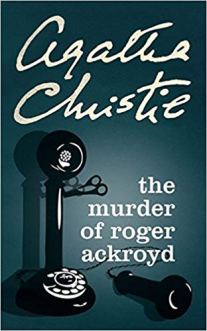
During our discussion of Ackroyd last week, one of my students asked, in this context, if at some point we were going to be talking about true crime. The short answer was no: no example is assigned to anchor our discussion, for one thing, and also it’s a course on detective fiction specifically. But it is something that I have thought about myself more than once recently, especially because I usually start the term by asking students to share their own experiences with crime fiction as a genre and increasingly many of them mention their interest in true crime podcasts as their starting point. I know, too, that there are books that challenge the line between fiction and non-fiction in ways that could prove really fascinating for us to talk about in class. Truman Capote called In Cold Blood a “non-fiction novel,” to cite probably the most famous example, but there are also plenty of novels that are based either directly or implicitly on actual cases—including, of course, The Moonstone, which has some ‘ripped from the headlines’ elements.
 One reason that to date I have not pursued this idea is that true crime, as a genre, makes me uneasy, squeamish, even—ethically, but also more literally. My experience with it is limited and mostly from television, where, for example, I have watched both the TV serial and the documentary The Staircase, as well as both The People vs O. J. Simpson and O. J.: Made in America — and also one season of Netflix’s Making a Murderer. If you can criticize made-up crime fiction for treating imaginary violent deaths as good subjects for an evening’s entertainment, how much worse is it to take the suffering and brutality and tragedy of actual murders and engage us with it in the spirit of a whodunit? Obviously, in both cases everything depends on the treatment: plenty of detective fiction does a lot more than offer us a puzzle, and I’m sure it is possible for true crime writing (or podcasting or dramatizations) to avoid the pitfalls of sensationalism, speculation, and grisly voyeurism. But it can’t help but be a grim kind of reading, writing, watching or thinking, and for my own forays into the already unhappy territory of murder I have just always relied, however naively, on the insulation that seemed to be provided, morally and imaginatively, by knowing that none of what I was reading about ever actually happened to anyone real.
My student’s question got me thinking again, though, about one of the novels that had come to my attention the last time I contemplated incorporating some true crime into my course: Denise Mina’s 2017 novel The Long Drop. I had gone so far as to take it out from the library once before but ended up returning it unread. Then last week I listened to an interview with Mina about it that renewed my interest and overcame some of my initial hesitations. I appreciated especially the ways Mina herself talked about genre, and also the deep sadness she said she felt for everyone involved in the terrible story her book is about. So yesterday I went back to the library to sign it out again, and I finished reading it this morning.
I’ll say right away that I don’t think I would ever assign The Long Drop. It’s just too grim, and too graphic. Students in a course on crime fiction have to be prepared for some tough material, but The Long Drop tells the story of serial rapist and killer Peter Manuel, and it gives quite a lot of detail about his crimes. I don’t think it’s “coddling” the students not to require them to dwell on this kind of thing, and frankly, I wouldn’t want to have to reread or close read this book either. I don’t think the detail Mina provides is gratuitous or sensationalized: I would describe her approach as unsparing. She’s not going to look past (or let us look past) how bad these crimes were, which seems right and also, perhaps unexpectedly, respectful. One of the most important and moving moments in the novel is when the father of one of Manuel’s victims testifies about his daughter’s death. He hates having to expose Isabelle, and his own grief, to the prurient curiosity of the people in the courtroom, but he feels it is his duty, and so he answers the lawyer’s questions about the terrible night that she disappeared, and the even more terrible day that her body is found. When he is done and is allowed to leave the courtroom,
Mr. Cooke feels no better. He wonders where the sense of finality is. He is as bereft as he was before but now he feels his sorrow exposed for the entertainment of the public. His loss will be written about in the papers tomorrow, read about on buses by people who don’t much care about Isabelle. People who don’t really care are watching him now from the balcony seats. He wonders bitterly if they found his loss entertaining.
Then he looks up and sees a woman among the spectators who is “weeping openly.” Her tears bring him no comfort: “His unique desolation was all he had left of his Isabelle. Now the crying woman has taken that as well.”
For me, this moment was a clear provocation for us to think about Mina’s own project. Is it possible to tell the story of Peter Manuel’s crimes in a way that doesn’t take anything more away from its victims, that doesn’t itself cause fresh harm? Is there a way for us to read about the case that is neither uncaring nor, like the weeping woman, intrusive? It isn’t our loss, after all; it isn’t our daughter. What right do we have to want to know all of this?
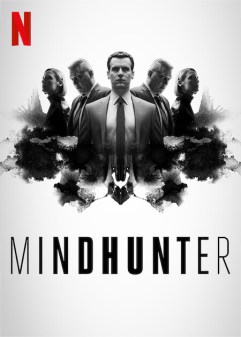 Mina talks in the interview about people’s fascination with serial killers (a point that reminds me of another ‘true crime’ series I’ve seen, “Mindhunter”—which itself walks a fine line in its treatment of its subjects) and notes that people usually want to see them as anomalous. The version of Manuel that her book gives us is hardly “normal,” but at the same time there’s something small, petty, even pathetic about him, rather than monstrous. He represents himself at the trial and one factor in his favor, we’re told, is that
he is charged with horrific crimes but is just standing there, with legs and hair and a jacket on, speaking, doing normal human things. He couldn’t have done those awful things, could he?
He is, however, a terrible liar, and his summing up is full of missteps and contradictions and obvious untruths. “The jury hate him,” Mina says,
not just because he has killed lots of people, but for telling them such a stupid story. A bad story is annoying but a very bad story is insulting. Does he think they are stupid? Is he stupid? He clearly isn’t stupid. He is very something but they don’t know what it is. There’s something really wrong with him.
By the end of his statement, “everyone in the court wants him dead.”
The Long Drop alternates between its recounting of the trial, based very carefully on research and transcripts, and Mina’s imaginative reconstruction of one of the most mysterious parts of the case: a meeting between Manuel and William Watt, whose wife and daughter were among Manuel’s victims. Watt was initially a prime suspect in the deaths of his family; desperate to clear his name, he offers money for information, and (inexplicably) Manuel reaches out. The two men spent an entire night out on the town together, but nobody knows what they actually said or did. This part of the novel, then, is purely fiction, though anchored in what bits of information Mina could find. I understand the temptation, for a novelist, to fill in this massive gap, but there’s something destabilizing about the result: the novel is a strange hybrid text that both does and doesn’t (because it can’t) tell a true story. I’m not objecting to Mina’s method: in fact, I’d enjoy talking with my class about how far it differs from what we see in other more straightforward crime fiction, in which the need to create a compelling narrative out of the evidence is often a central theme. That material evidence alone does not tell us what happened is a pivotal point in The Moonstone, and the resolution of The Hound of the Baskervilles also relies on assumptions and suppositions as much as on things that are known for sure.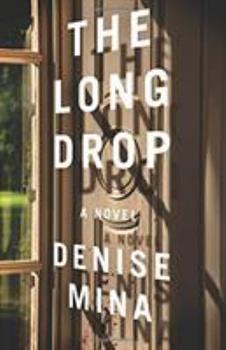
In these respects The Long Drop would fit well into the course as I already teach it, and it would definitely provide a thoughtful and thought-provoking example of one author’s approach to the ethical challenges of writing and reading true crime. It’s also a book that, like others we read in the course, challenges us to consider the relationship between what is legal and what is right. The “long drop” is the special method of hanging used in Scotland at the time (Mina tells us that Manuel is the third-last person executed before capital punishment was abolished there). Her account of Manuel’s own death is also unsparing about the brutality of killing another human being. How much does it matter that it is this human being, who himself showed no humanity?
But overall The Long Drop is, as Mina herself says, a creepy story. I was gripped by it even as I hated reading it—not just because it will be hard to shake off the graphic details but because I felt I was falling into prurience in spite of myself and maybe also in spite of Mina. I didn’t really want to know what I was finding out in this book, but I couldn’t look away. My suspicion about true crime has always been that it appeals to a troubling version of ourselves, the kind of person who is willing to look at real people as if they are characters in a crime novel. Isn’t that worse than enjoying a crime novel that doesn’t treat its characters as real people?
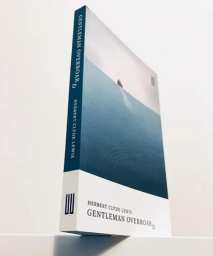 The best of them was undoubtedly Herbert Clyde Lewis’s Gentleman Overboard, which I was inspired to read by listening to Trevor and Paul talk about it on the Mookse and the Gripes podcast. It is a slim little book with a simple little story, but it contains vast depths of insight and feeling, and even some touches of humor, as it follows Henry Preston Standish overboard into the Pacific Ocean and then through the many hours he spends floating and treading water and hoping not to drown before the ship he had been traveling on comes back to pick him up. We also get to see how the folks on board react when he’s discovered to be missing, and we follow his thoughts and memories, learning more about him and how he came to be where he is—not in the ocean, which is easily and bathetically explained (he slips on a spot of grease at just the wrong moment when he’s in just the wrong place), but sailing from Honolulu to Panama in the first place.
 I also really appreciated Molly Peacock’s A Friend Sails in on a Poem, which is an account of her long personal and working friendship with fellow poet Phillis Levin. It is a blend of memoir and craft book, which might not work for every reader, but I found the insider perspective on how poems are created and shaped fascinating and illuminating. Peacock includes some of the poems that she talks about; this was my favorite:
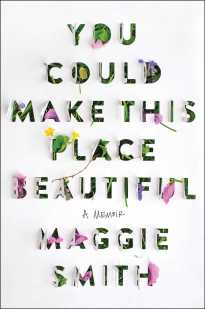 I was more ambivalent about Maggie Smith’s You Could Make This Place Beautiful. At times I found its fragmentary structure annoying in the way I often feel about books that read to me as unfinished, deliberately or not. But I also thought some of the rhetorical devices Smith uses to structure it were very effective, especially her reflections on the questions, usually well-meaning, people have asked her about the breakdown of her marriage, her divorce, and her writing about it: there are the answers she would like to give, typically raw, fraught, and conflicted, reflecting the complexity of her feelings and experiences, which defy straightforward replies; and then there are the answers she does give, neater, shorter, sanitized. That rang true to me, as it probably does to anyone who has been through something difficult and knows that when people ask how you are doing, they are not really, or are only rarely, asking for the real answer.
 Finally, I just finished Mick Herron’s London Rules, the third (or possibly fourth?) of his
 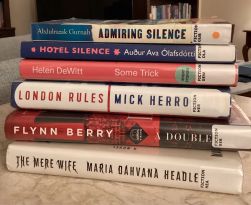 I hope to get back to more regular blogging about books, and about my classes, an exercise in self-reflection that I’ve missed. It has been a very busy and often stressful couple of months, for personal reasons (about which, as I have said before, more eventually, perhaps), but whenever I do settle in to write here I am reminded of how good it feels, of how much I enjoy the both the freedom to say what I think and the process of figuring out what that is! My current reading (slowly, in the spirit of Kim and Rebecca’s #KateBriggs24 read-along, though I am not an official participant) is Kate Brigg’s The Long Form, which I am enjoying a lot; I’m experimenting with having more than one book on the go, as well, so now that I’ve finished London Rules I will go back to my tempting stack of library books and pick another to contrast with Briggs, perhaps
  Novel Readings