
I’ve been reading through my archive of posts about “This Week In My Classes,” which goes back to September 2007, nearly the very beginning of Novel Readings itself. There are some (possibly) practical reasons for doing this, including considering what to say in my contribution for a forum on teaching Victorian literature today that my colleague Tom Ue is organizing for the Victorian Review.
I’ve also been thinking more generally about the unbearable lightness of blogging—the flip side of the immediacy that is such a big part of its appeal as a form is its ephemerality. I have put so much effort, and so much of myself, into writing here at Novel Readings; as it becomes increasingly evident that, however persistently some of us keep up the habit, the ‘Golden Age of Blogging’ is past (something that is clearer to me than ever as I review the vigorous discussions that once happened in my comments sections), I find myself wondering if any of this archive is worth revisiting, revising, repurposing in some way that might be—I don’t want to say “more substantial,” because I fondly believe it is already substantial, if in a diffuse way—so let’s say a bit stickier.
 The exercise so far has been at once invigorating and strangely mournful, or maybe not so strangely, given the context. For one thing, it’s not just blogging as a phenomenon that is past its prime but also, perhaps, my teaching career, although in my brighter moments I hope that there is time, and that I will have the energy, to make its last decade meaningful to both me and my students. Another context, of course, is Owen’s death and my continuing sense of disorientation in my own life, a feeling that is somehow harder, more confusing, to deal with when I am in the midst of what used to be normalcy, including especially, this term, on campus. So much is the same, including the work I am doing and (more or less) the person that I am while I’m doing it: how can that be? The discrepancy between my two realities continues to give me emotional vertigo, and rereading my old posts intensifies the effect, because they immerse me, in the moment, in the world before everything split apart. They are full, too, of casual references to my children—to sick days and holidays, to March break camps and Christmas shopping. Many of those years were actually hard times in many ways, both personally and professionally; frank as I have been about some aspects of my life, there’s a lot I’ve never talked about here. Now, though, they seem like such innocent times. Whatever my struggles, whatever I imagined or dreaded about the future, it was never this.
 One question in the back of my mind throughout this term was: should I say anything to my classes about Owen’s death? Was there any way in which that recent experience of mine was relevant, not just to me personally but to what we were doing there together? Most of the time the answer pretty clearly seemed to be “no.” I did say, once or twice, that for personal reasons I wasn’t necessarily at my best and they should feel free to remind me or correct me about things if I got muddled. But in general I like fairly clear boundaries with my students (“be friendly, but not their friend” is the advice I got early on, and I still consider it sound); of course I’m always communicating my enthusiasms, interests, and values, just through what I teach and how I teach it, but I’m not a fan of oversharing, on either side. Suicide is also a fraught topic, and it is impossible for me to know how bringing up my own trauma might affect other people in the room. I think some of my students did know—and in fact one or two kindly extended their sympathies to me outside of class, which I appreciated.
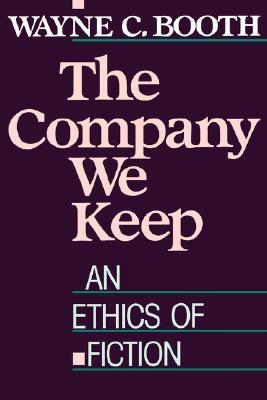 I did finally bring it up, though, on the last day of class in 19th-Century Fiction. I usually end that class with a peroration about why I think our work is worthwhile, on what I hope they have learned from our readings and discussions, and, most important, on what I hope they will take away from it all. For many years (and my review of my teaching posts has shown me just how long this has been true) I have thought about my classes as less about conveying specific content than about teaching reading—about training better readers. Always, in these closing remarks, I note that they will only be assigned “required reading” for a fragment of their reading lives; the rest of the time, what they read and how they read it will be up to them, as will be their relationship with books in other ways, from supporting public libraries to attending book festivals, from joining book clubs to getting involved in debates about the curriculum in the public schools. I do care about their engagement with the particular books I’ve worked on with them; I am always delighted when I hear from a former student who has carried away a love of Victorian novels and continues to seek them out, or who thinks back on our journey through Middlemarch as a highlight of their university years (and some do!). But I also hope that my students carry away a set of habits and skills for reading, and a set of questions to ask of anything they read, questions like the one Booth proposes as fundamental in The Company We Keep: “Is the pattern of life that this would-be friend offers one that friends might well pursue together?” (The best literary “friends,” he elaborates, are identified by “the irresistible invitation they extend to live during these moments a richer and fuller life than I could manage on my own,” which is as good a definition of literary merit as I know.)
 In my closing peroration in 19th-Century Fiction this year, I said a lot of the same things, but I also commented on two specific contexts for our work together that really mattered to me this term, both of which had given new urgency, in my mind, to questions about how we all spend our time, not just but especially in the classroom. The first was my return to in-person teaching after two+ years of teaching online, an experience which has prompted a lot of pedagogical reflection for me. Before COVID, I made a lot of assertions about the importance of teaching in person (some of them prompted by MOOCs, which seem to have fizzled out conspicuously as both promise and threat). I have learned a lot in the past three years about online teaching—enough not to dismiss it or recoil from it, but also enough to know that I was right that, for me and the kind of teaching I enjoy and value most, being in the room with my students is preferable. I struggled a lot this year because it wasn’t clear that a number of my students thought the same; I hope that this is a lingering effect of the COVID years (not that they are really over, sadly) and that eventually those meetings will hum with their old energy. I didn’t go on and on about this to my class, not least because the ones who were present were the ones who had pretty much always been present, so they had shown their own commitment to what I strongly believe is, at its best, a collaborative venture.
 And the second context I brought up was that this had been my first term back in the classroom since my son died. I did not go into any details about his death, but I told them that, inevitably, it had prompted a lot of questions for me about how I spend (and have spent) my life and my work, about what my priorities have been over the years. I have worked hard, I told them, to recover and sustain my conviction that if teaching was the kind of thing that had been worth doing before Owen died, it was still worth doing, and doing as well as I could manage, after he died as well—a principle I have tried to believe in and live up to in other ways as well, including maintaining this blog. I got a bit choked up talking about this, which I knew was a risk, and maybe it was too personal a thing to say. Rightly or wrongly, though, it really mattered to me to tell them—this group who had stuck it out with me all term in our grim, windowless room, heads up, masks on—that our time together had really meant something to me, that I wasn’t just going through the motions, that teaching might be “just a job” in some respects, but that it is a lot more than that in others. I guess that’s something I hope they will carry away from my class as well, that (as Aurora Leigh tells us), “the world of books is still the world,” and that how we read, and how we think about reading, is inseparable from how we live.

 “So far the votes are two Asperger’s, one probably OCD, and one possible ADHD,” he tells Martin, a neuroscientist friend of Alyssa’s to whom he eventually turns for help. “Most of the common meds are pretty normalized,” Martin comments, but when Theo insists that he wants “some treatment short of drugs,” Martin proposes that Robbie enter his ongoing trial of a therapy called
  Theo’s tense, beautiful, heartbreaking account of his life with Robin is intercut with their “visits” to other planets: part of Theo’s work is running simulations of what kind of life might emerge under wildly varying conditions which he and Robbie “explore” with exhilarating curiosity and awe. These sections are weird and wonderful, visions of possible worlds completely unlike our own and yet always imagined as possible points of connection. On the planet Pelagos, for instance,
 I was initially drawn to Bewilderment because of its description as the story of a father and his “rare and troubled boy.” I had a son like that, and while his specific passions and hardships were not the same as Robbie’s, Powers captures a lot of what it was like to try and to fail to know what was right for someone whose gifts and whose difficulties were equally extraordinary, excessive, sometimes exhausting, especially but not only for him. I too liked my son “otherworldly”; his ingenuousness was so precious, even as it made him, sometimes, so vulnerable. “His pronouncements were off-the-wall mysteries to everyone except me,” Theo says of Robin;
 Novel Readings