 I didn’t plan it this way, but it turns out that teaching Lord of Scoundrels at the end of a term that has also included Bleak House, Adam Bede, and Tess of the d’Urbervilles is a good way to bring home the truth of Jennifer Crusie’s remark that a lot of great literature is really toxic to women. In romance fiction, as she points out, “you can have sex without dying horribly,” which is indeed, as she says, “a plus.”
Crusie isn’t the only person to emphasize this contrast between romance fiction and the parade of great novels in which women’s sexuality brings them shame, isolation, desperation, and even death, of course. In fact, the sex-positivity of romance is a recurrent theme in most of the books I’ve read about the genre, or at least in those that are as much (or more) about advocacy as about analysis. Here’s Sarah Wendell, for instance, in Everything I Know About Love I Learned From Romance Novels:
One of the more empowering and, in my never-humble opinion, awesomely excellent things about sex in romance is that the woman is not punished or ultimately harmed for being curious or even assertive about her sexual needs. Even in the Old Skool days of forced seductions and other questionable scenes, the wages of sex were not death, ostracism, misery, poverty, and complete moral turpitude. Getting some didn’t mean giving yourself away — and it didn’t mean you were done for once you did the deed.
And here’s Maya Rodale in her Dangerous Books for Girls:
Romance novels came to provide a safe place for women to explore their desires, free from the risk of rape, guilt, judgment, slut-shaming, disease, unplanned pregnancy, or regret. In contrast to so many other depictions of sex, from literature to porn to movies, romance novels are completely and unabashedly focused on the woman’s feelings and pleasure. And, most revolutionarily of all, romance heroines can enjoy sex and still live happily ever after.
These generalizations certainly wouldn’t hold up for all examples of a genre that goes back as far and ranges as widely as romance, and I think there are also some problems with arguments about romance that focus too much on sex — as if there’s no HEA for people who are asexual, for instance, or no such thing as sexual trauma that might complicate that “unabashed” focus on pleasure. Still, after following the tribulations of yet another tragic woman who learns that “the serpent hisses where the sweet bird sings” — after Lady Dedlock’s forlorn fate, and Hetty’s wanderings, and now Tess’s catastrophes, it is a breath of fresh air to turn to Jessica and Dain. As Jess tells her appreciative grandmother after their first reckless, swoon-worthy kiss,
“If we had not been struck by lightning — or very nearly — I should be utterly ruined. Against a lamppost. On the Rue de Provence. And the horrible part is . . . I wish I had been.”
After Jessica and Dain are caught passionately embracing in the garden during Lady Wallingdon’s party, “though her face heated at the recollection, she refused to feel ashamed at what she’d done.” It’s not that Chase ignores the potential for scandal and worse from such a compromising event, but she writes her heroine out of the trap her desire has landed her in, and Jessica’s HEA builds on, rather than overcomes, her “unabashed” hunger for and pleasure in Dain’s “big and dark and beautiful body.”
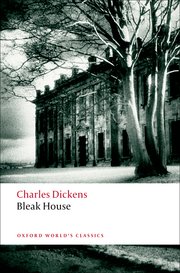 And yet, while the overt and (ultimately) happy sexiness of Lord of Scoundrels is indeed “awesomely excellent,” it’s not entirely fair to set up modern romance fiction as the positive alternative to punishing Victorian fiction, which I think can actually be quite “sex positive,” albeit usually in a much more subtle, and sometimes perverse, way. For one thing, the women who pay such a high price for breaking society’s rules are very often portrayed as victims: the novelists direct our disapprobation not against them but against the world that treats them so cruelly for something so understandable or natural. Lady Dedlock should not have died cold and alone reaching for her lover’s grave: all the moral and emotional force of Bleak House is directed against that outcome. It’s true that the implication may still be that she has sinned, but she deserves to be forgiven and brought back into the loving embrace of her long-lost daughter, our moral exemplar. Eliot and Hardy make it particularly clear that their “erring” heroines are participating (more or less willingly, of course) in a natural process made shameful and dangerous by social codes, not because it is intrinsically wrong. If only some reconciliation could be made between flesh and spirit, between nature and law — so much shame and fear and violence could be avoided!
Still, these ruined women provide vivid and memorable (and sometimes uncomfortably aestheticized) spectacles of the price of unauthorized sexuality, so my case for the defense rests more on the importance placed on sexual attraction for the happy endings 19th-century novels do themselves provide. Over and over, after all, the unsexy match is rejected in favor of the one that promises that the heroine will “enjoy sex and still live happily ever after.” Think of Mr. Collins, Mr. Boarham, Mr. Casaubon, St. John Rivers, Seth Bede, Philip Wakem, Mr. Phillotson … there’s a long parade of obviously unsuitable suitors. Think, too, of the blushing (Dinah with Adam), the racing pulses (Anne Elliot with Captain Wentworth), the sweating horses (Stephen Guest visiting Maggie), the fixated gaze (Mr. Thornton and Margaret), the nearby lightning strike (Will and Dorothea) … so many signs in so many cases that the right match is the exciting one, that the happy ending (if it can be achieved) brings the promise of sexual satisfaction, if safely within the (constantly tested and expanded) boundaries of social acceptability.
I realize that these examples of HEAs based on sex that is socially safe could be seen as missing the point — outside that boundary, after all, is still all that same old “guilt, judgment, slut-shaming, disease, … [and] regret.” I guess I just want to complicate the implication of the romance advocates that we had to wait for romance fiction to open up a space for acknowledging, imagining, depicting, or even celebrating women’s sexuality. It’s not as if there aren’t bad examples in romance fiction too, after all, and even more to the point, it’s not as if it only counts as positive if the sexual aspect is made explicit. Romance heroines also still have to find a way, a place, to live in their world: it’s not as if the space they create for all that sexual assertion and exploration is outside society.
That doesn’t mean Lord of Scoundrels isn’t still refreshing, though, in both its frankness and its fun. “If you think I could not . . . make you eat out of my hand, if that’s what I wanted,” says Jessica to her obstreperous new husband, who so far has shied away from actually making love to her, “I recommend you think again, Beelzebub.” “I should like to see you try,” he responds — and by that point, so would we all.
 The March madness continues – indeed, I’ve been wondering how I managed not just to read but also to blog about actual books more than once last week. I felt quite on top of things for a bit, but two sets of papers have just come in, more paper proposals are incoming even as I write, and by Friday I’ll have another set of tests to mark … whew! The trick is just to take it one item at a time, and to take regular breaks for tea and treats. 🙂
 In 19th-Century Fiction we’ve been finishing up
 There’s a lot else that I appreciated about Mitzi Bytes, including
  The division (however unstable) between Sarah’s “real” life and her blogged experiences also resonated with me, but in this case because my own experience of that split in identities is the reverse of Sarah’s. Because I blog under my own name, I have mostly avoided discussion of my personal life, for instance, including writing only occasionally and very selectively about my family and almost never about my friends. I think of ‘Novel Readings’ as a personal but also a public space, not a private one. Though I have certainly addressed some fraught issues (especially around my professional life) and some emotional ones, I think (though like Sarah, I may be deluding myself!) that by and large my online persona is better (more positive, more generous, more temperate) than I sometimes am offline. It’s not that my blog doesn’t represent who am I, but like ‘Mitzi Bytes,’ ‘Novel Readings’ represents only parts of who I am — the better parts, I usually think, though over the years there have certainly been slips. Though I can see the appeal of a blog where I could really let loose, as Sarah does when writing as Mitzi (and as some anonymous academic bloggers once did – remember “BitchPhD”?), I have come to appreciate the pressure to rise to my own standards here.
 Only very gradually do the new realities of England at war make themselves felt. Food becomes scarcer, and extra preserves seem called for. Belgian refugees arrive, their suffering at first nearly overlooked in the villagers’ excitement at being part of “the great enterprise under way”:
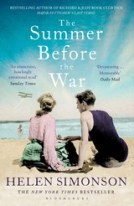 What interested and impressed me the most about The Summer Before the War as the inevitable catastrophe unleashes itself on our characters is that once the war is fully upon them, and us, it isn’t the contrast with the earlier, more innocent and bucolic, scenes that makes its horrors and losses so painful: rather, it’s the continuity. These are the same people, with the same dreams and values, the same attachments and affections — even the tone of the novel is very nearly the same in the trenches as it is when we’re in a sunny lane or a village shop. The Summer Before the War balances its attention between the battlefields and the home front, where loss leads too often to isolation. “On such a day as this,” thinks Beatrice, contemplating the bright morning of a planned festivity,
 I can’t believe Reading Week is already two weeks ago — but that’s what it’s always like when we come back. I don’t like to say that it’s all downhill from there, but it does always seem as if the term accelerates, even as the work accumulates. And there are just so many moving parts! All the routine business of class meetings continues, including doing the readings, preparing lecture notes or handouts or worksheets or slides, keeping attendance records, and just plain showing up and going through the whole song and dance number — which is the most fun part, but also the most tiring part. From now until after exams, there’s also a constant flow of assignments in and out, and that means getting topics and instructions up in plenty of time; there are tests to prepare — which has to be done earlier than it used to so copies can be dropped off for students with accommodations — and then to mark; there are forms for this and emails about that.
 One nice thing is that the readings for both classes provided rich fodder for discussion recently. In Pulp Fiction we’ve just wrapped up our time on The Maltese Falcon. For our last session we talked mostly about Sam’s choice between love and justice at the end of the novel. “If they hang you, I’ll always remember you” is hardly a conventionally romantic declaration, but coming from Sam, it seems like a lot! What I find so interesting is that it seems at least possible that he really does love Brigid (though he doesn’t seem quite sure, and neither were we, overall), but it just doesn’t matter to him that much: he’s not even torn over it. We’re so used to stories (and songs, and greeting cards) in which all you need is love, but Sam believes other things matter more (“when a man’s partner dies, he’s supposed to do something about it”), and why not, really? I’m reminded of the scene in The West Wing when Leo’s wife complains that to him, his job (as White House Chief of Staff) is more important than his marriage. “Right now, it is,” he says, and in context that doesn’t seem unreasonable. Sam is a pretty objectionable guy in other ways, so I would never hold him up as exemplary, but it’s refreshing to have someone take the position that “maybe I love you, and maybe you love me” might not be what matters the most. Plus, what a neat segue that sets up for our unit on romance fiction, which starts very soon.
 On a different note, I actually wrote most of an entirely different post on Wednesday in honor of International Women’s Day. I wanted to pay tribute in some way to the many women who have made a positive difference in my life: the women in my family, my dear friends, the women I work with, the women writers whose books enrich my life in so many ways, the amazing women characters they envisioned who have also served as my inspirations and role models. In the end, though, I decided not to post it, not because I didn’t mean it, but because I couldn’t seem to write it in a way that didn’t sound like vacuous gushing. Maybe that would have been fine, I don’t know, but it seemed shallow to me, when my intentions were just the opposite. Instead, then, you got this rather dull housekeeping post! I really do want to thank and celebrate these wonderful people: I’m just going to find a different way to do so.

 Novel Readings